
Check Point Licensing and Renewals Guide 2026
Managing check point licensing and renewals requires careful planning, clear understanding of entitlement models, and coordination across technical and procurement teams. For organizations relying on Check Point firewalls, endpoint protection, or cloud security solutions, license expiry can disrupt protection and compromise compliance postures. Business leaders without dedicated internal security teams face particular challenges tracking subscription periods, selecting appropriate tiers, and ensuring uninterrupted coverage across hybrid environments.
This guide addresses the practical and governance questions that arise when purchasing, tracking, and renewing Check Point licenses. We focus on decision-making factors, operational workflows, and how managed cybersecurity partnerships can simplify license administration while strengthening overall security outcomes.
Understanding Check Point License Models
Check Point structures its products around subscription-based licensing with varying tiers, feature sets, and support levels. Licenses typically cover defined periods (one, three, or five years) and grant access to threat intelligence updates, software upgrades, and technical support. The Official Check Point licensing overview details how product licenses, subscriptions, and entitlements are structured across appliances, virtual gateways, and software blades.
Subscription models generally fall into three categories:
- Perpetual licenses with annual support contracts: One-time purchase for the software; ongoing cost for updates and support
- Term-based subscriptions: All-inclusive pricing for a defined period; coverage ends at expiry unless renewed
- Cloud marketplace licenses (BYOL and PAYG): Bring-your-own-license for existing entitlements or pay-as-you-go pricing integrated with cloud billing
Each model affects budgeting, compliance tracking, and renewal workflows differently. Perpetual licenses require separate support renewals, while term subscriptions bundle everything but necessitate careful expiry monitoring.

Cloud Deployment Considerations
Organizations deploying Check Point in AWS or Azure must choose between BYOL and PAYG models. The AWS Marketplace listing for Check Point CloudGuard explains how BYOL transfers existing on-premises licenses to cloud instances, while PAYG bundles software and infrastructure charges into hourly billing.
BYOL offers cost advantages for committed deployments but requires license tracking across environments. AWS License Manager automates entitlement tracking, conversion between license types, and lifecycle management for teams managing Check Point BYOL licenses in AWS. Similarly, Microsoft Marketplace purchase controls govern how Azure Marketplace treats BYOL offerings and purchase-control options relevant to deploying Check Point in Azure.
Hybrid architectures with on-premises appliances, virtual gateways, and cloud instances compound license management complexity. Centralized asset tracking becomes essential to avoid duplicate purchases or coverage gaps.
License Renewal Timelines and Workflows
Check point licensing and renewals operate on strict expiry schedules. When a subscription expires, the gateway continues to function but stops receiving threat intelligence updates, software patches, and vendor support. This degradation creates operational and compliance risks that business leaders must address through proactive renewal planning.
Establishing a Renewal Calendar
Effective renewal management starts with visibility into current entitlements and expiry dates. Check Point SmartConsole provides tools for viewing, distributing, and updating licenses across managed gateways. Administrators should export license inventories quarterly and flag subscriptions expiring within 90 days.
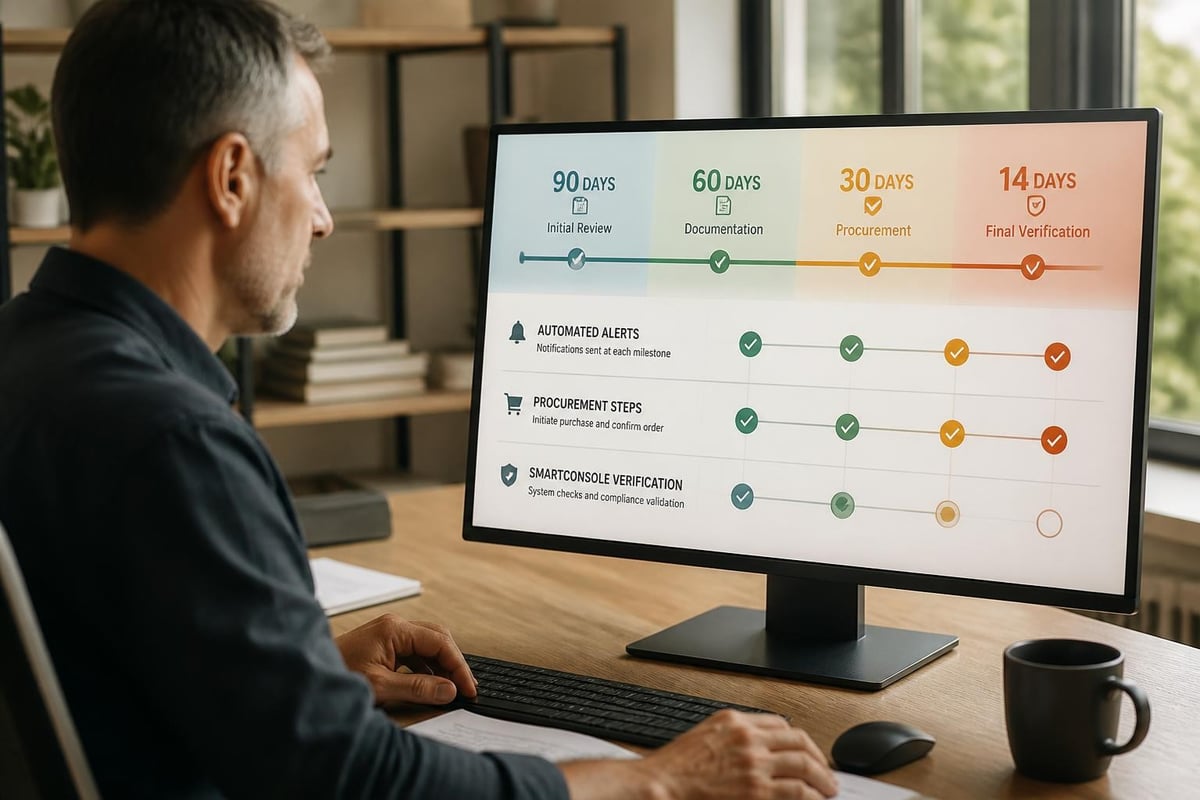
Recommended renewal milestones:
- 90 days before expiry: Review current usage, evaluate tier requirements, and request budget approval
- 60 days before expiry: Obtain renewal quotes, compare licensing options, and finalize purchase orders
- 30 days before expiry: Complete procurement, receive new license keys, and schedule installation windows
- 14 days before expiry: Install updated licenses, verify activation, and confirm threat intelligence feeds resume
Lead times vary by procurement processes, vendor response, and internal approval chains. Organizations operating under fiscal constraints or multi-jurisdictional purchasing policies should extend these timelines accordingly.
| Milestone | Action | Owner | Deliverable |
|---|---|---|---|
| 90 days | Usage review and budget request | Security Manager | Budget approval and justification |
| 60 days | Vendor engagement and quote comparison | Procurement Team | Purchase order ready for approval |
| 30 days | License purchase and delivery | Finance and IT | License keys received and documented |
| 14 days | Installation and verification | Security Admin | Active licenses confirmed in SmartConsole |
Automating Expiry Notifications
Manual tracking across dozens of appliances, virtual gateways, and cloud instances introduces risk of missed renewals. Automated monitoring through asset management platforms or ITSM tools ensures consistent notification and escalation.
SANS Institute asset management guidance provides operational best practices for IT asset and software entitlement lifecycle management that support timely renewals and compliance. Integrating Check Point license data into centralized configuration management databases (CMDBs) enables automated workflows that alert stakeholders when subscriptions approach expiry.
Compliance and Governance Implications
Expired or improperly managed licenses create compliance risks under frameworks that require current security controls and vendor support. Check point licensing and renewals intersect with multiple governance domains that business leaders must address.
Security Framework Requirements
ISO 27001, SOC 2, PCI DSS, and other frameworks mandate that security controls remain effective and receive timely updates. Expired Check Point licenses prevent threat intelligence updates and vulnerability patches, directly undermining control effectiveness. Auditors reviewing security operations will examine license status, renewal documentation, and evidence that subscriptions remained active throughout the assessment period.
Organizations implementing ISO 27001 ISMS must demonstrate processes for maintaining security tools, including license lifecycle management. Control A.8.6 (capacity management) and A.12.6.1 (technical vulnerability management) both require current subscriptions to threat intelligence and software updates.
Asset Management Maturity
Effective license management reflects broader IT asset management (ITAM) maturity. KPMG guidance on ITAM maturity provides practical frameworks and checkpoints to improve license tracking, renewals, and cost optimization. Organizations at higher maturity levels integrate license data with financial systems, automate renewal workflows, and maintain centralized entitlement registries.
Business leaders should assess current ITAM capabilities and identify gaps that increase renewal risk:
- Ad-hoc tracking: Spreadsheets maintained by individual administrators; high risk of expiry
- Department-level systems: Separate databases per business unit; visibility gaps across divisions
- Centralized registry: Single source of truth; automated alerts and workflow integration
- Financial integration: License costs tied to budgets; renewal forecasting and cost allocation
Moving from ad-hoc to centralized tracking typically requires investment in asset management platforms and process standardization. The compliance and cost-avoidance benefits justify this investment for organizations operating multiple Check Point deployments.
Procurement Strategies and Cost Optimization
Check point licensing and renewals present opportunities to optimize costs while maintaining required protection levels. Strategic procurement balances immediate budget constraints with long-term security and operational needs.
Multi-Year Subscriptions and Volume Discounts
Check Point offers pricing advantages for multi-year commitments and volume purchases. Three-year subscriptions typically reduce annual costs by 15-25% compared to annual renewals. Organizations with stable security requirements and predictable growth should evaluate longer commitment periods to reduce total cost of ownership.
Volume licensing programs provide additional discounts for enterprise deployments. Consolidating renewals across business units or subsidiaries maximizes negotiating leverage and simplifies administration.
Cost comparison example (illustrative):
| Subscription Term | Annual Cost per Gateway | Total Three-Year Cost | Effective Annual Rate |
|---|---|---|---|
| Annual renewal | $5,000 | $15,000 | $5,000 |
| Three-year subscription | N/A | $12,000 | $4,000 |
| Savings | N/A | $3,000 (20%) | $1,000 per year |
Right-Sizing License Tiers
Check Point offers multiple tiers (Essential, Advantage, Premium, Quantum) with varying feature sets and support levels. Organizations frequently over-purchase licenses based on initial uncertainty or vendor recommendations rather than actual requirements.
Regular usage reviews identify opportunities to adjust tiers based on deployed features, throughput needs, and support utilization. For example, gateways deployed for basic packet filtering may not require advanced threat prevention features included in premium tiers.
Conversely, under-licensed deployments expose organizations to compliance and operational risks. Threat intelligence updates, sandboxing, and advanced features critical to defense-in-depth strategies require appropriate subscription tiers. Balancing cost optimization with security effectiveness requires clear understanding of threat landscape, regulatory requirements, and risk tolerance.
Managed Security Partnerships
Organizations without internal expertise to evaluate licensing options, track renewals, or optimize deployments should consider managed cybersecurity partnerships. F&C's managed security operations include license lifecycle management as part of comprehensive protection programs.
Managed providers assume responsibility for renewal tracking, procurement coordination, and tier optimization. They also provide ongoing threat monitoring, vulnerability management, and compliance support that maximize the value of Check Point investments. For business leaders in Australia, New Zealand, the US, and Dubai operating without dedicated security teams, this model delivers enterprise-grade protection without internal staffing requirements.
Mobile and Endpoint License Considerations
Check Point Harmony Endpoint extends protection to laptops, mobile devices, and remote workstations. Managing these licenses introduces additional complexity due to user mobility, device turnover, and evolving workforce patterns.
Dynamic User Populations
Organizations with fluctuating headcounts or seasonal staffing must align endpoint licenses with actual user populations. Over-licensed deployments waste budget, while under-licensed environments leave devices unprotected. NIST guidance on managing mobile device security provides authoritative recommendations for lifecycle management, support requirements, and subscription planning for endpoint security products.
Quarterly reconciliation between purchased licenses and active devices ensures accurate renewals. This process should account for:
- New hires requiring endpoint protection
- Departing employees whose devices are decommissioned
- Contractors and temporary workers with time-limited access
- Device replacements that transfer licenses from old to new hardware
BYOD and Personal Device Policies
Bring-your-own-device (BYOD) programs complicate endpoint licensing by blurring boundaries between corporate-managed and personal assets. Check point licensing and renewals must align with acceptable use policies, privacy requirements, and device management strategies.
Organizations should clarify whether Check Point Harmony Endpoint licenses apply to personal devices, contractor equipment, or only company-owned assets. This decision affects license quantities, renewal costs, and compliance with data protection regulations in different jurisdictions.
Renewal Support and Technical Resources
Renewing licenses involves more than purchasing new subscription keys. Organizations must ensure proper installation, verify activation, and confirm that threat intelligence feeds resume normal operation.
Vendor Support During Renewals
Check Point provides technical assistance through support contracts tied to active licenses. When subscriptions expire, access to vendor support also lapses. This creates challenges when organizations encounter installation issues or activation failures during renewal processes.
Engaging vendor support before expiry ensures continuity. Organizations should open pre-renewal support tickets to verify current configurations, address any outstanding technical issues, and prepare for seamless license updates.
Installation and Verification Steps
After receiving new license keys, administrators must install and verify them across all managed gateways. The process varies by deployment model:
- On-premises appliances: Log into SmartConsole, navigate to license management, upload new license files, and distribute to gateways
- Virtual gateways: Update license parameters in virtual machine configurations and verify through management console
- Cloud instances (BYOL): Update license references in deployment templates or instance metadata
Post-installation verification confirms:
- License status shows as active with correct expiry date
- Threat intelligence feeds resume normal update schedules
- All security blades and features remain operational
- Gateway logs reflect successful activation
Organizations managing hundreds of gateways should script these verification steps and integrate results into operational dashboards.
Strategic Planning for Long-Term License Management
Sustainable check point licensing and renewals require integration with broader IT governance, risk management, and financial planning processes. Ad-hoc approaches create budget surprises, coverage gaps, and compliance exposures.
Integration with IT Governance
License lifecycle management should align with governance frameworks and GRC strategies that define roles, responsibilities, and accountability for security investments. This integration ensures that renewal decisions reflect enterprise risk posture, compliance obligations, and business objectives rather than purely technical considerations.
Key governance touchpoints include:
- Budget planning cycles: Forecasting renewal costs 12-18 months in advance
- Risk assessments: Evaluating impact of expiry on specific assets and processes
- Compliance reporting: Documenting license status for auditors and regulators
- Vendor management: Maintaining relationships and negotiating favorable renewal terms
Lifecycle Roadmaps
Multi-year roadmaps align license renewals with technology refresh cycles, migration projects, and business growth. For example, organizations planning to migrate from on-premises data centers to cloud environments should coordinate Check Point license transitions with infrastructure changes.
A typical three-year roadmap might include:
- Year 1: Renew existing on-premises licenses while planning cloud migration
- Year 2: Transition to BYOL model for cloud deployments; maintain hybrid licensing
- Year 3: Complete migration; consolidate all licenses under cloud subscription model
This approach avoids duplicate license costs during transition periods and ensures protection continuity throughout infrastructure changes.
Common Renewal Challenges and Solutions
Business leaders encounter predictable obstacles when managing check point licensing and renewals. Anticipating these challenges enables proactive mitigation.
Budget Approval Delays
Renewal costs sometimes arise unexpectedly in fiscal periods without allocated funds. This triggers multi-week approval processes that consume the 60-90 day renewal window. Solutions include:
- Annual budget line items: Pre-allocating renewal costs based on known expiry dates
- Multi-year contracts: Reducing approval frequency by committing to longer terms
- Finance partnerships: Educating CFO and finance teams on compliance and operational risks of expired licenses
Decentralized Procurement
Organizations with autonomous business units or regional offices struggle to centralize license purchasing. Different teams negotiate separate renewals, losing volume discounts and creating administrative overhead.
Centralizing procurement through enterprise agreements or preferred vendor programs consolidates purchasing power and standardizes renewal workflows. Corporate IT or security teams should establish governance models that balance local autonomy with enterprise-wide efficiency.
Technical Complexity in Hybrid Environments
Tracking licenses across on-premises appliances, virtual gateways, cloud instances, and endpoint deployments requires sophisticated asset management capabilities. Many organizations lack visibility into total deployed licenses, leading to over-purchasing or unexpected expiries.
Implementing configuration management databases (CMDBs) or IT asset management (ITAM) platforms provides the centralized visibility needed for accurate renewals. Alternatively, partnering with managed security providers transfers this complexity to specialists with established tracking systems.
Managing check point licensing and renewals effectively protects your organization from both cyber threats and compliance exposures while optimizing security investments. Success requires clear visibility into current entitlements, proactive renewal planning, and alignment with broader governance frameworks. For business leaders operating without dedicated internal security teams, these responsibilities can divert attention from core business objectives. F&C delivers managed cybersecurity and compliance services that include license lifecycle management alongside comprehensive threat monitoring, vulnerability testing, and governance support, enabling you to maintain enterprise-grade protection without internal staffing complexity.