
Managed Vulnerability Services: A Business Guide
Organizations face an expanding attack surface as digital infrastructure grows more complex. Every application, server, workstation, and network device represents a potential entry point for threat actors. Understanding which vulnerabilities pose the greatest risk and how to address them systematically requires expertise, resources, and continuous effort that many businesses struggle to maintain internally. Managed vulnerability services provide a structured approach to identifying, assessing, prioritizing, and remediating security weaknesses before adversaries can exploit them.
Understanding Managed Vulnerability Programs
Managed vulnerability refers to the outsourced delivery of vulnerability identification, assessment, prioritization, and remediation tracking services. Rather than building an internal capability from scratch, organizations partner with specialized providers who bring technical expertise, established workflows, and proven tooling to the engagement.
The fundamental distinction between point-in-time testing and ongoing managed vulnerability programs lies in continuity. A single penetration test delivers a snapshot of weaknesses at a specific moment, while managed programs establish recurring assessment cycles that evolve with your infrastructure. New systems come online, configurations drift, vendors publish patches, and threat intelligence reveals previously unknown attack vectors.
Core Components of Managed Vulnerability Services
Effective managed vulnerability programs combine several interconnected activities:
- Asset discovery and inventory maintaining current visibility into all systems requiring assessment
- Vulnerability scanning using automated tools to detect known weaknesses across infrastructure
- Manual validation confirming findings and eliminating false positives through expert analysis
- Risk-based prioritization ranking vulnerabilities according to exploitability, business impact, and threat context
- Remediation planning developing actionable recommendations with clear ownership and timelines
- Progress tracking monitoring remediation efforts and validating closure of identified issues
These components operate in a continuous cycle rather than as discrete projects. The OWASP Vulnerability Management Guide provides practical frameworks for building this operational rhythm into business-as-usual security activities.

Scoping Managed Vulnerability Services for Your Organization
Before engaging a managed vulnerability provider, decision-makers need clarity about what the service will and will not include. Scope definition directly impacts both effectiveness and cost.
Defining Assessment Boundaries
Start by identifying which assets require regular vulnerability assessment. This typically includes:
| Asset Category | Assessment Considerations | Typical Frequency |
|---|---|---|
| External-facing infrastructure | Web servers, mail gateways, VPN endpoints | Weekly to monthly |
| Internal network devices | Routers, switches, firewalls, domain controllers | Monthly to quarterly |
| Workstations and endpoints | Employee devices, kiosks, specialized equipment | Quarterly |
| Applications | Custom code, commercial packages, APIs | Per release cycle |
| Cloud environments | IaaS, PaaS, container platforms | Continuous |
Not every asset requires the same assessment depth or frequency. External systems facing the internet demand more frequent scanning because they're immediately accessible to attackers. Internal systems benefit from regular assessment but may operate on longer cycles aligned with change management windows.
Distinguishing Vulnerability Assessment from Penetration Testing
Many organizations confuse vulnerability scanning with penetration testing. While both identify weaknesses, they serve different purposes and require different skill sets.
Vulnerability assessment systematically identifies known weaknesses across infrastructure using automated scanning tools supplemented by expert validation. These assessments answer "What vulnerabilities exist?" and provide comprehensive coverage across large environments.
Penetration testing simulates real-world attacks by attempting to exploit identified vulnerabilities and chain them together to achieve specific objectives. These tests answer "Can an attacker actually compromise our systems?" and require specialized security practitioners who think like adversaries.
The Managed VAPT and Forensics service combines both approaches, tailoring assessment depth to your specific risk profile and compliance obligations. Organizations benefit most when vulnerability assessment provides continuous visibility while periodic penetration testing validates that compensating controls effectively reduce risk.
Prioritization: Moving Beyond CVSS Scores
Every vulnerability scan generates hundreds or thousands of findings. Without intelligent prioritization, security teams face an impossible task: remediate everything immediately or risk making arbitrary decisions about what matters most.
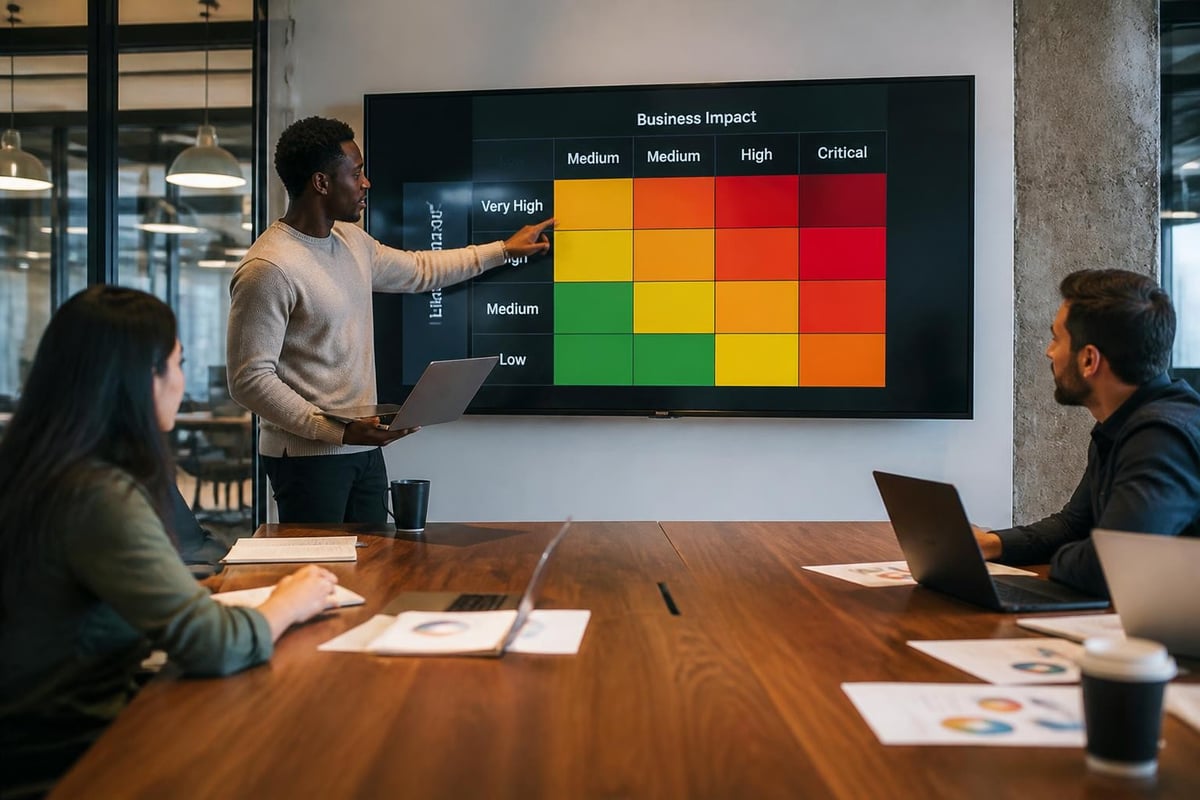
The Common Vulnerability Scoring System (CVSS) provides a standardized method for rating vulnerability severity, but CVSS scores alone don't tell you which vulnerabilities to fix first. A critical-rated vulnerability in an isolated test environment poses less immediate risk than a medium-rated weakness in your internet-facing customer portal.
Risk-Based Prioritization Frameworks
Effective managed vulnerability programs incorporate multiple factors when prioritizing remediation:
- Exploitability: Is exploit code publicly available? Are active attacks observed in the wild?
- Asset criticality: How important is this system to business operations or data protection?
- Exposure level: Is the vulnerable system accessible from the internet, or only internally?
- Compensating controls: Do network segmentation, WAF rules, or other defenses reduce exploitability?
- Threat intelligence: Are threat actors specifically targeting this vulnerability type in your industry?
The SANS Vulnerability Assessment Framework describes a seven-phase model that emphasizes context-aware prioritization over simple score-based ranking.
Organizations working toward governance frameworks and GRC strategy benefit from aligning vulnerability prioritization with risk appetite statements and risk treatment plans. This ensures remediation efforts focus resources where they deliver the greatest risk reduction.
Operational Integration and Remediation Workflow
Identifying vulnerabilities represents only half the challenge. Organizations must also establish clear processes for remediation assignment, tracking, and validation.
Building Remediation Accountability
Managed vulnerability services generate findings, but internal teams must execute remediation. Successful programs establish clear ownership for different vulnerability categories:
- Infrastructure team addresses operating system patches, firmware updates, and network device configuration
- Application development remediates code-level vulnerabilities and dependency updates
- Database administrators handle database platform patches and configuration hardening
- Cloud platform team addresses misconfigurations and excessive permissions in cloud environments
- Third-party vendors remediate vulnerabilities in outsourced or managed components
The SANS vulnerability management policy template provides practical language for documenting these responsibilities and establishing service-level objectives for remediation timelines based on severity.
Tracking Remediation Progress
Effective tracking mechanisms should answer several key questions without requiring manual status updates:
- Which vulnerabilities remain open beyond their target remediation date?
- Are specific teams consistently struggling to meet remediation objectives?
- How has the overall vulnerability backlog trended over the past six months?
- What percentage of critical findings are remediated within SLA targets?
Modern managed vulnerability platforms integrate with ticketing systems, configuration management databases, and asset management tools to automate much of this tracking. Regular reporting to leadership demonstrates program effectiveness and highlights systemic issues requiring additional investment or process change.
Compliance and Regulatory Considerations
Many organizations initially pursue managed vulnerability services to satisfy regulatory or certification requirements rather than purely risk-based motivations. Understanding these compliance drivers helps scope services appropriately.
Common Compliance Frameworks Requiring Vulnerability Management
| Framework | Key Requirements | Typical Scope |
|---|---|---|
| PCI DSS | Quarterly external scans by ASV; internal scans after significant changes | Cardholder data environment |
| ISO 27001 | Regular vulnerability assessment (Annex A.12.6.1) | All in-scope systems |
| NIS2 Directive | Vulnerability handling and disclosure (Article 21) | Essential and important entities |
| SOC 2 | Vulnerability scanning appropriate to risk (CC7.1) | Service delivery infrastructure |
| HIPAA | Regular vulnerability scanning and remediation (164.308(a)(8)) | Systems processing PHI |
The ENISA NIS2 technical implementation guidance specifically addresses vulnerability management obligations for digital service providers operating in the European Union, though these practices apply more broadly across geographies.
Organizations implementing ISO 27001 ISMS must demonstrate that vulnerability assessments occur at planned intervals and that identified weaknesses are evaluated for risk. This creates natural alignment between compliance objectives and operational security improvement.
Audit Evidence and Documentation
Managed vulnerability providers should deliver documentation suitable for audit purposes:
- Scan reports showing assessment coverage, methodology, and findings
- Remediation tracking demonstrating timely closure of identified issues
- Exception documentation justifying accepted risk for vulnerabilities that won't be remediated
- Process evidence showing scheduled assessments occurred as planned
This documentation becomes particularly valuable during certification audits, customer security reviews, and regulatory examinations.
Selecting a Managed Vulnerability Provider
Not all managed vulnerability services deliver equivalent value. Organizations evaluating providers should consider several differentiating factors beyond cost.
Technical Capability and Tooling
Assess the provider's scanning technology and coverage:
- Does the provider use multiple scanning engines to reduce false negatives?
- Can they assess cloud-native environments, containers, and serverless functions?
- Do they offer authenticated scanning to detect vulnerabilities requiring credentials?
- How do they handle specialized environments like industrial control systems or medical devices?
The technical capabilities should align with your actual infrastructure rather than a generic offering designed for the lowest common denominator.
Analyst Expertise and Validation
Automated scanning tools generate raw findings that require expert interpretation. Understanding the provider's approach to validation and false positive elimination reveals service quality:
- What qualifications and certifications do security analysts hold?
- How do they validate scan findings before reporting them?
- Do they provide remediation guidance beyond generic vendor recommendations?
- Can they explain technical findings to both IT staff and business stakeholders?
Providers who invest in skilled analysts deliver actionable intelligence rather than overwhelming customers with unverified scanner output.
Service Integration and Customization
Consider how the managed service integrates with your existing security and IT operations:
- Communication channels: Regular meetings, ticketing integration, Slack channels, or email-based reporting
- Reporting customization: Executive dashboards, technical findings reports, trend analysis
- Remediation support: Guidance on patches, configuration changes, or architectural improvements
- Escalation procedures: Clear processes for critical findings requiring immediate attention
- Knowledge transfer: Training internal teams to understand vulnerability management principles
The NIST Special Publication 800-216 provides recommendations for vulnerability disclosure practices that inform how managed providers should handle particularly sensitive findings.
Measuring Managed Vulnerability Program Effectiveness
Organizations need metrics to evaluate whether their managed vulnerability investment delivers meaningful risk reduction.
Leading and Lagging Indicators
Effective measurement combines forward-looking metrics that predict future performance with backward-looking metrics that confirm results:
Leading indicators include:
- Mean time to detect new vulnerabilities after they're published
- Percentage of assets successfully scanned in each assessment cycle
- Coverage of critical assets versus total environment
- False positive rate trending over time
Lagging indicators include:
- Mean time to remediate by severity level
- Total vulnerability count trending over quarters
- Percentage of findings remediated within SLA targets
- Vulnerabilities remaining open beyond 90 days
Together, these metrics reveal both operational efficiency and risk reduction outcomes. Organizations pursuing compliance monitoring and reporting can incorporate vulnerability metrics into broader security dashboards for leadership visibility.
Benchmarking Against Industry Standards
Understanding how your vulnerability program performs relative to similar organizations provides valuable context. While specific benchmarks vary by industry and organization size, general patterns include:
- Critical vulnerabilities should be remediated within 15-30 days on average
- High-severity findings typically target 30-60 day remediation windows
- Overall vulnerability backlog should trend downward over 6-12 months after program launch
- Asset coverage should exceed 95% of in-scope systems in each assessment cycle
The CISA ransomware guidance emphasizes vulnerability management as a critical defense against the most prevalent current threat, providing additional context for prioritization decisions.
Building Long-Term Resilience Through Managed Vulnerability Services
The most successful managed vulnerability programs evolve beyond compliance checkboxes or reactive firefighting. They become foundational elements of security resilience that systematically reduce attack surface over time.
Continuous Improvement Cycles
Mature programs establish regular review cycles to refine assessment scope, improve prioritization accuracy, and optimize remediation workflows. This might include:
- Quarterly program reviews assessing metric trends and identifying improvement opportunities
- Annual scope adjustments incorporating new infrastructure or divesting deprecated systems
- Semi-annual calibration of prioritization criteria based on emerging threat intelligence
- Regular feedback sessions between managed service analysts and internal remediation teams
Organizations implementing continual improvement programs find natural synergy between vulnerability management maturity and broader security program development.
Integration with Broader Security Architecture
Managed vulnerability services deliver maximum value when integrated with complementary security capabilities:
- Threat intelligence informs prioritization by highlighting actively exploited vulnerabilities
- Security monitoring detects exploitation attempts against known vulnerabilities before remediation completes
- Configuration management prevents vulnerability reintroduction through infrastructure-as-code practices
- Patch management automates remediation of common operating system and application vulnerabilities
This integration transforms managed vulnerability from a standalone service into a key component of defense-in-depth architecture.
Vendor and Third-Party Risk Extension
Modern organizations depend on vendors, cloud service providers, and managed service partners who introduce vulnerabilities outside direct control. Leading managed vulnerability programs extend assessment coverage to these relationships through:
- Vendor security questionnaires including specific vulnerability management practice questions
- Right-to-audit clauses allowing validation of vendor vulnerability management programs
- Shared responsibility mapping clarifying which party manages vulnerabilities in different infrastructure layers
- Third-party scan data integration incorporating vendor-provided vulnerability reports into unified tracking
Organizations focused on third-party and supplier risk recognize that their security posture depends on partners' vulnerability management practices as much as their own.
Starting Your Managed Vulnerability Journey
Organizations beginning to explore managed vulnerability services typically fall into one of several scenarios, each requiring slightly different approaches.
Scenario one: No current vulnerability program exists. Focus first on establishing baseline asset inventory and initial comprehensive assessment to understand current state.
Scenario two: Point-in-time assessments occur annually but lack continuity. Transition to recurring assessment cycles with remediation tracking between engagements.
Scenario three: Internal scanning exists but lacks expertise for validation and prioritization. Augment existing tools with managed validation and risk-based prioritization services.
Scenario four: Comprehensive program exists but requires independent validation. Engage managed services for gap assessments and program maturity evaluation.
Regardless of starting point, successful programs begin with clear objectives, realistic scope, and stakeholder alignment between security, IT operations, and business leadership. The conversation with potential providers should address not just technical capabilities but also how the service will integrate with your specific operational constraints, compliance obligations, and risk priorities.
Managed vulnerability services transform security weakness identification from an overwhelming technical challenge into a systematic, measurable risk reduction program. Organizations across Australia, New Zealand, the United States, and Dubai benefit from partnering with specialists who bring both technical expertise and established operational frameworks to this critical security function. F&C delivers managed vulnerability assessment and penetration testing tailored to your specific infrastructure, risk profile, and compliance requirements, backed by certified security professionals. Whether you're establishing your first structured vulnerability program or seeking to mature existing capabilities, F&C provides the expertise and partnership to build lasting security resilience.